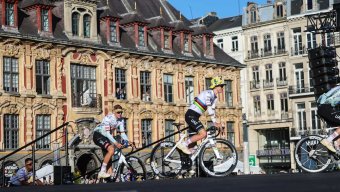
Dole start line sets the tone for a long tactical day
The day begins quietly in Dole, a charming riverside town in the Jura known for its historic streets and relaxed atmosphere. But once the flag drops, the calm disappears. Early kilometers are relatively flat and fast, the kind of terrain that encourages attacks from riders hunting for a breakaway.
Because the finish lies high in the hills, sprint teams have little reason to chase. That changes everything. Without tight control from the peloton, a strong group could build a significant gap. Right from the start, stage 13 feels open and unpredictable.
Stage 13 route profile through Jura and Haute-Saône countryside
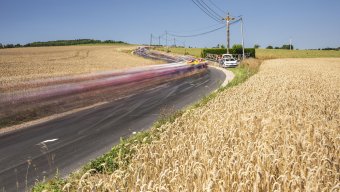
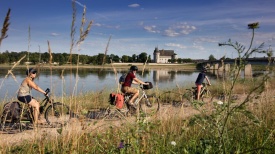
The first half of the route flows through gentle farmland and rolling terrain. Villages appear one after another, church towers rising above green fields, quiet backroads framed by forests and meadows. It is classic eastern France, beautiful and deceptive. Riders may feel comfortable, yet the accumulated distance slowly drains energy.
After passing Besançon, the character of the stage changes. The road begins to tilt upward more consistently. Nothing dramatic at first, just enough to wear down legs that have already pushed hard for hours. This gradual evolution is what makes the finale so selective.
Main locations along the Dole Belfort route
| Place |
Region |
Race significance |
| Besançon |
Doubs |
Transition from flat to rolling terrain |
| Mélisey |
Haute-Saône |
Emotional hotspot linked to Thibaut Pinot |
| Ballon d’Alsace |
Vosges |
Historic summit and decisive climb |
| Belfort |
Territoire de Belfort |
Technical downhill finish |
Ballon d’Alsace climb brings Tour de France history to life
The true heart of stage 13 is the Ballon d’Alsace. More than a climb, it is a monument in cycling history. In 1905, this mountain introduced the Tour to the concept of high-altitude racing. Over a century later, it still commands respect.
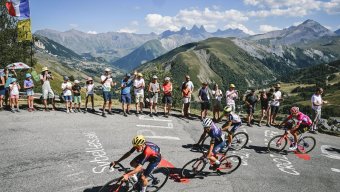
The numbers speak clearly. Around nine kilometers at nearly seven percent average gradient. After 190 kilometers of racing, those figures feel far steeper than they look on paper. Climbers will sense their opportunity here. A sharp acceleration could break the race apart, turning a controlled stage into pure survival mode.
Placed so late in the day, the climb invites bold tactics. A solo attack near the summit could be decisive, especially with the descent immediately following.
Mélisey and Thibaut Pinot add emotion to stage 13
Few moments promise as much atmosphere as the peloton’s passage through Mélisey. This small village is forever linked to Thibaut Pinot, one of France’s most beloved riders. Even though he may no longer be racing in 2026, his legacy lives on here.
Expect banners, cheers, and a heartfelt welcome. It is a reminder that the Tour is not just about watts and tactics. It is about people, memories, and local pride. For fans lining the roadside, this section could be as meaningful as the finish itself.
Technical descent and Belfort finish favor all-rounders
Once over the Ballon d’Alsace, the race does not simply glide toward the finish. The descent into Belfort is fast and demanding. Twisting corners, changing gradients, and high speeds require focus and skill. Any mistake could cost seconds or worse.
The run-in suits complete riders who can climb strongly and descend confidently. It is less about raw sprint power and more about timing and courage. Belfort, dominated by its famous Lion sculpture and surrounded by hills, provides a dramatic backdrop for what could be a spectacular solo or small-group finish.
Possible race scenarios for stage 13 of the Tour de France 2026
- A strong breakaway survives the day and fights for victory on the climb
- General classification contenders attack on the Ballon d’Alsace to gain precious seconds
- A reduced group descends together and contests a tactical sprint in Belfort
In short, almost anything can happen. That uncertainty is exactly what makes this stage so compelling.
A stage where endurance meets heritage
Stage 13 of the Tour de France 2026 perfectly captures the soul of the race. It blends distance, history, and strategy into one exhausting adventure across eastern France. From the gentle start in Dole to the legendary slopes of the Ballon d’Alsace and the sharp finale in Belfort, every kilometer tells a story.
For viewers and cycling travelers alike, this is a stage to remember. It celebrates the past while shaping the present, proving once again that the Tour de France is as much about geography and culture as it is about competition.
FAQ about stage 13 of the Tour de France 2026
Why is the Ballon d’Alsace so important in Tour history?
It was one of the first major mountain climbs ever used in the Tour. Its inclusion helped define the race’s legendary mountain challenges.
Is this stage suitable for sprinters?
No, the late climb and long distance make it extremely difficult for pure sprinters. The day favors climbers and breakaway specialists.
Could general classification riders attack here?
Yes, the Ballon d’Alsace is steep and positioned late enough to create time gaps, making it ideal for GC moves.
What makes the finish in Belfort tricky?
The descent into the city includes fast and technical sections, requiring skillful bike handling and precise positioning.
Is this region interesting for cycling tourism?
Very much so. The Jura, Haute-Saône, and Vosges areas offer scenic roads, forests, and historic towns, making them perfect for exploring by bike while following the Tour.