Tour de France 2027 Route Map: From Edinburgh to Paris
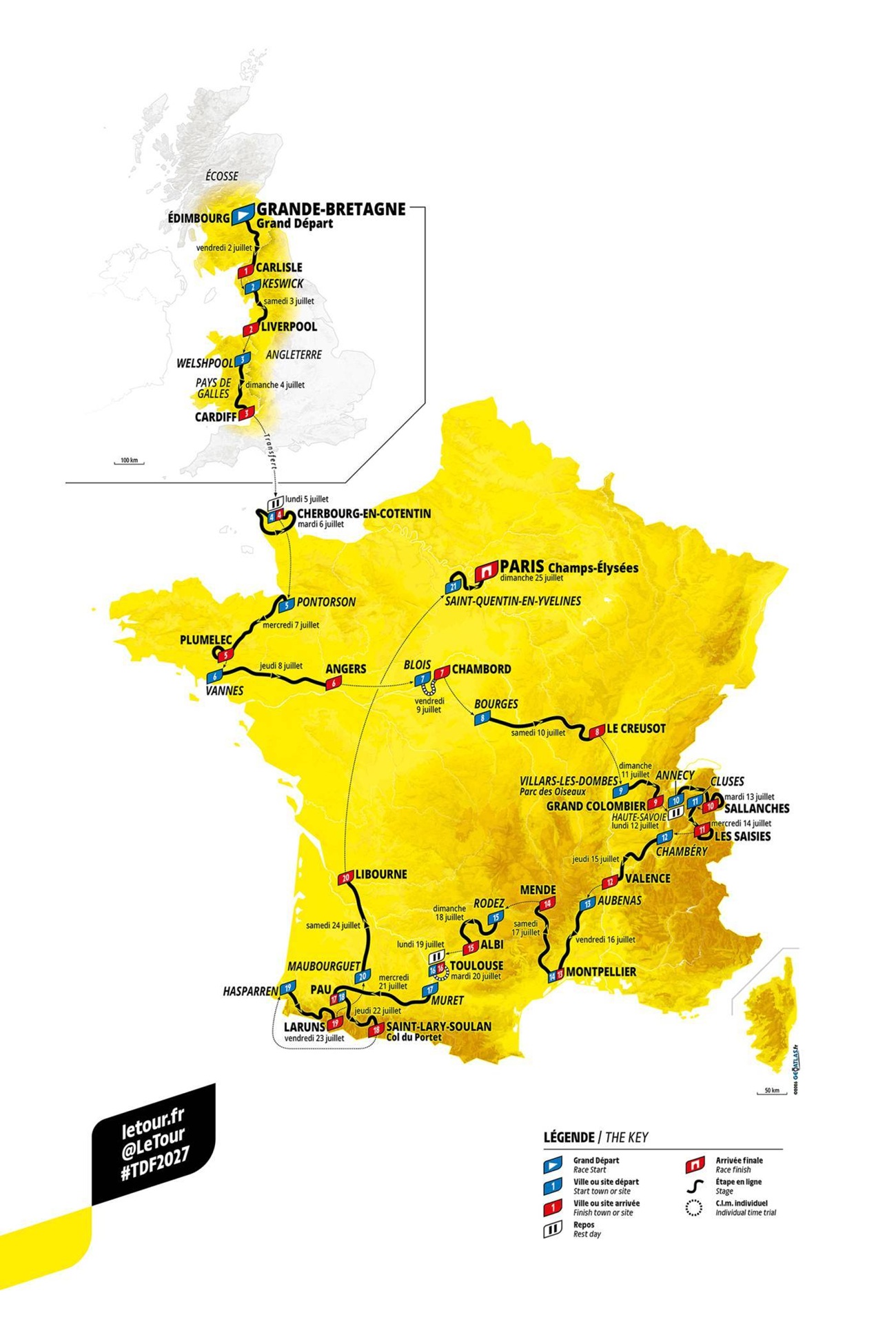
The Tour de France 2027 route map reveals an extraordinary journey through contrasting landscapes, historic cities, and legendary cycling destinations. The race begins in Scotland, travels through northern England and Wales, and then crosses the English Channel to continue in France.
From Normandy and Brittany, the route heads toward the Loire Valley, famous for its magnificent châteaux and cycling-friendly countryside. The first major mountain challenges follow in the Jura and French Alps, with demanding climbs around the Grand Colombier, Sallanches, and Les Saisies.
The peloton then travels south through the Massif Central before reaching Toulouse and the Pyrenees. Here, some of the most famous climbs in cycling history will provide the final major tests before the journey to Paris.
For cycling enthusiasts, the 2027 Tour de France highlights the incredible diversity of French cycling landscapes, from scenic valley roads and historic villages to challenging high-altitude mountain passes.
Tour de France 2027 Stages: Complete Schedule
The Tour de France 2027 stage schedule includes 21 stages between July 2 and July 25, with three rest days. The table below provides the complete route, including dates, starting and finishing locations, distances, and stage profiles.
Click on each stage guide to discover its detailed route, key climbs, and highlights.
| Stage | Date | Start → Finish | Distance | Profile | Details |
|---|
| 1 | July 2 | Edinburgh → Carlisle | 185 km | Flat | Stage 1 Guide |
| 2 | July 3 | Keswick → Liverpool | 223 km | Hilly | Stage 2 Guide |
| 3 | July 4 | Welshpool → Cardiff | 223 km | Hilly | Stage 3 Guide |
| Rest | July 5 | Cherbourg-en-Cotentin | — | Rest Day | Transfer to France |
| 4 | July 6 | Cherbourg-en-Cotentin → Cherbourg-en-Cotentin | 171 km | Hilly | Stage 4 Guide |
| 5 | July 7 | Pontorson → Plumelec | 178 km | Hilly | Stage 5 Guide |
| 6 | July 8 | Vannes → Angers | 193 km | Hilly | Stage 6 Guide |
| 7 | July 9 | Blois → Chambord | 38 km | Individual Time Trial | Stage 7 Guide |
| 8 | July 10 | Bourges → Le Creusot | 224 km | Hilly | Stage 8 Guide |
| 9 | July 11 | Villars-les-Dombes Parc des Oiseaux → Grand Colombier | 162 km | Mountain | Stage 9 Guide |
| Rest | July 12 | Haute-Savoie | — | Rest Day | Second Rest Day |
| 10 | July 13 | Annecy → Sallanches | 171 km | Mountain | Stage 10 Guide |
| 11 | July 14 | Cluses → Les Saisies | 150 km | Mountain | Stage 11 Guide |
| 12 | July 15 | Chambéry → Valence | 162 km | Flat | Stage 12 Guide |
| 13 | July 16 | Aubenas → Montpellier | 164 km | Flat | Stage 13 Guide |
| 14 | July 17 | Montpellier → Mende | 199 km | Mountain | Stage 14 Guide |
| 15 | July 18 | Rodez → Albi | 169 km | Hilly | Stage 15 Guide |
| Rest | July 19 | Toulouse | — | Rest Day | Third Rest Day |
| 16 | July 20 | Toulouse → Toulouse | 33 km | Individual Time Trial | Stage 16 Guide |
| 17 | July 21 | Muret → Pau | 186 km | Flat | Stage 17 Guide |
| 18 | July 22 | Pau → Saint-Lary-Soulan Col du Portet | 174 km | Mountain | Stage 18 Guide |
| 19 | July 23 | Hasparren → Laruns | 160 km | Mountain | Stage 19 Guide |
| 20 | July 24 | Maubourguet → Libourne | 198 km | Flat | Stage 20 Guide |
| 21 | July 25 | Saint-Quentin-en-Yvelines → Paris Champs-Élysées | 116 km | Flat | Stage 21 Guide |
Tour de France 2027 Route Highlights: The Key Stages to Watch
While every stage brings its own challenges, several moments of the 2027 Tour de France route stand out as potential turning points. From a historic Scottish departure to spectacular summit finishes in the French mountains, these are the highlights that cycling fans will not want to miss.
The Historic Grand Départ in Edinburgh
The 2027 Tour de France will make history with its first Grand Départ in Edinburgh, Scotland. This will be the northernmost starting point in the history of the race and the third British Grand Départ, following London in 2007 and Yorkshire in 2014.
The opening weekend will showcase Scotland, England, and Wales. The first stage from Edinburgh to Carlisle offers an early opportunity for sprinters to claim the yellow jersey, while the longer and hillier routes to Liverpool and Cardiff may encourage attacks and unpredictable racing.
Beyond the competition, this British Grand Départ promises enthusiastic crowds, historic cities, and beautiful countryside, creating a memorable introduction to the 114th Tour de France.
The Loire Valley Time Trial: Blois to Chambord
On July 9, the riders will face their first major test against the clock: a 38-kilometer individual time trial from Blois to Chambord. Set among the magnificent châteaux of the Loire Valley, this largely flat course will reward riders capable of maintaining high speeds and consistent power.
This time trial could produce the first significant differences between the leading contenders. While mountain specialists will aim to limit their losses, powerful time trial riders may have an opportunity to gain a valuable advantage before the race reaches the Jura and Alps.
The Loire Valley is also one of France’s most appealing cycling destinations, celebrated for its Renaissance architecture, vineyards, charming villages, and scenic routes. The setting around Chambord makes this stage particularly attractive for spectators looking to combine cycling with French cultural heritage.
The Grand Colombier: The First Summit Finish
The first major mountain challenge arrives on July 11, when stage nine finishes at the summit of the Grand Colombier in the Jura Mountains. The final ascent measures approximately 17.4 kilometers at an average gradient of 7.1%, providing a demanding early test for the general classification contenders.
The Grand Colombier is known for its sustained gradients, spectacular views, and challenging mountain roads. With the first significant summit finish of the race, this stage could reveal which riders are best prepared for the mountains and establish important time differences before the second rest day.
The French Alps: Annecy, Sallanches and Les Saisies
The French Alps will play a crucial role in the Tour de France 2027, with two consecutive mountain stages on July 13 and 14. These stages will showcase spectacular Alpine landscapes while testing the climbing abilities and endurance of the world’s best cyclists.
The route from Annecy to Sallanches includes two ascents of the Côte de Domancy, a steep climb measuring approximately 2.5 kilometers at an average gradient of 9.4%. The climb holds an important place in cycling history, having featured in Bernard Hinault’s victory at the 1980 World Championships.
The following day, the Bastille Day stage from Cluses to Les Saisies promises an even more demanding challenge. With approximately 4,750 meters of elevation gain, the route features several major ascents, including the Col de la Colombière, Col de la Croix-Fry, Col du Pré, and Montée de Bisanne.
These two stages could significantly reshape the overall standings. For cycling enthusiasts, the area around Annecy and the Haute-Savoie mountains also offers some of the most spectacular cycling routes in France, combining legendary climbs with beautiful lakes, traditional villages, and breathtaking mountain scenery.
The Cévennes Challenge: Montpellier to Mende
On July 17, the Tour de France heads into the dramatic landscapes of the Cévennes for a demanding mountain stage from Montpellier to Mende. Covering 199 kilometers with approximately 4,300 meters of elevation gain, this route is one of the most challenging of the second week.
The stage includes repeated climbs through rugged countryside and the steep Côte de la Croix-Neuve, approximately three kilometers long at an average gradient of 10.1%. Its difficult terrain could encourage aggressive racing, especially as riders begin to feel the effects of two demanding weeks on the road.
Beyond the sporting challenge, the Cévennes offer magnificent landscapes, quiet mountain roads, and authentic villages, making this region an attractive destination for adventurous cyclists.
The Toulouse Time Trial: A Decisive Final-Week Test
The second individual time trial will take place on July 20, with a 33-kilometer route around Toulouse. Unlike the predominantly flat Loire Valley time trial, this course includes the Côte de Pech David, introducing a climbing element that could affect pacing strategies and equipment choices.
By this point in the Tour de France, fatigue will be a major factor. Riders who have managed their energy efficiently may gain valuable time, while those struggling after two weeks of competition could lose ground before the final mountain stages.
With 71 kilometers of individual time trials across the entire race, the 2027 edition places renewed emphasis on an essential discipline that may prove decisive in the battle for the yellow jersey.
The Queen Stage: Col du Tourmalet and Col du Portet
One of the most anticipated moments of the Tour de France 2027 will arrive on July 22, when the riders tackle the demanding mountain stage from Pau to Saint-Lary-Soulan, finishing at the summit of the Col du Portet.
With approximately 5,400 meters of elevation gain, this stage features several legendary Pyrenean climbs, including the Col du Soulor, Col du Tourmalet, and Col du Portet. The Tourmalet is one of the most iconic mountain passes in cycling history, while the Col du Portet provides an exceptionally difficult final ascent.
The Col du Portet climb measures approximately 16 kilometers at an average gradient of 8.7%, reaching an altitude of 2,215 meters. It will be the highest point of the Tour de France 2027.
The combination of altitude, steep gradients, repeated climbs, and accumulated fatigue makes this a potential turning point in the general classification. Riders competing for the overall victory may need to attack here, creating the possibility of a dramatic mountain showdown.
The Final Pyrenean Battle: Hasparren to Laruns
On July 23, the Tour de France will feature its final major mountain stage between Hasparren and Laruns. The 160-kilometer route crosses the French Basque Country and western Pyrenees, taking riders over demanding climbs including the Col de Burdincurutcheta, Col du Soudet, and Col de Marie-Blanque.
These ascents feature steep gradients and sustained climbing sections that could create major difficulties after the previous day’s demanding ride to the Col du Portet. With only two stages remaining, this could be the final opportunity for the main contenders to change the overall standings.
The surrounding landscapes are equally impressive, with green valleys, dramatic mountain roads, and traditional Basque and Pyrenean villages providing a magnificent setting for the final mountain confrontation.
The Paris Finale: Montmartre and the Champs-Élysées
The Tour de France 2027 will conclude on Sunday, July 25, with a 116-kilometer final stage from Saint-Quentin-en-Yvelines to Paris. The route will once again include three ascents of Rue Lepic on the famous Montmartre hill before the traditional finish on the Champs-Élysées.
The Montmartre circuit introduces an exciting and unpredictable dimension to the final stage. Its steep streets could encourage attacks and challenge the sprinters before the race reaches the iconic finish line.
Surrounded by Parisian landmarks and enthusiastic spectators, the final stage promises a memorable celebration of the 114th Tour de France and the crowning of the overall winner.
Tour de France 2027 Mountains: The Most Important Climbs
The Tour de France 2027 mountain stages will cross several of France’s most celebrated cycling regions, including the Jura, the French Alps, the Massif Central, and the Pyrenees. Although there are fewer high-mountain stages than in some recent editions, the combination of steep gradients, long ascents, and accumulated elevation gain will provide significant challenges.
The route includes three summit finishes at the Grand Colombier, Les Saisies, and Col du Portet. These climbs could have a major influence on the outcome of the race, particularly when combined with the demanding stages through the Cévennes and western Pyrenees.
| Climb | Stage | Length | Average Gradient |
|---|
| Grand Colombier | 9 | 17.4 km | 7.1% |
| Côte de Domancy | 10 | 2.5 km | 9.4% |
| Col de la Colombière | 11 | 15.9 km | 7% |
| Col de la Croix-Fry | 11 | 7.2 km | 5.5% |
| Col du Pré | 11 | 12.6 km | 7.8% |
| Montée de Bisanne | 11 | 12.4 km | 8.3% |
| Côte de la Croix-Neuve | 14 | 3 km | 10.1% |
| Col du Soulor | 18 | 11.8 km | 7.3% |
| Col du Tourmalet | 18 | 19 km | 7.4% |
| Col du Portet | 18 | 16 km | 8.7% |
| Col de Burdincurutcheta | 19 | 8.7 km | 9.3% |
| Col du Soudet | 19 | 15.1 km | 7.2% |
| Col de Marie-Blanque | 19 | 7.7 km | 8.6% |
For cycling enthusiasts, these climbs represent some of the most rewarding roads in France. The Grand Colombier, Col du Tourmalet, and Col du Portet are particularly popular with experienced riders looking for challenging ascents and unforgettable mountain scenery.
Tour de France 2027 Time Trials: 71 Kilometers Against the Clock
One of the defining characteristics of the 2027 Tour de France route is the return of longer individual time trials. The two races against the clock total 71 kilometers, the highest amount since 2012.
The first time trial, from Blois to Chambord on July 9, covers 38 kilometers of predominantly flat terrain through the Loire Valley. Its profile favors specialists capable of maintaining high speeds and a consistent aerodynamic position.
The second time trial takes place around Toulouse on July 20 and covers 33 kilometers. The inclusion of the Côte de Pech David adds a climbing challenge, making the course more varied and potentially rewarding riders with a combination of power and climbing ability.
These two stages could play a decisive role in the overall classification. Strong time trial specialists may gain significant advantages, while climbers will need to limit their losses before attempting to recover time in the mountains. Combined with the three summit finishes, the increased time trial mileage creates a fascinating tactical balance.
Where to Watch the Tour de France 2027
Watching the Tour de France from the roadside is one of the most exciting experiences in professional cycling. From the atmosphere of the Grand Départ to the drama of mountain stages and the celebrations in Paris, the race offers unforgettable moments for spectators.
The Tour de France 2027 route features several outstanding destinations for visitors looking to combine the race with sightseeing and cycling adventures.
Edinburgh: Experience the Historic Grand Départ
Edinburgh will host the historic opening of the 2027 Tour de France. Scotland’s capital combines remarkable architecture, a rich cultural heritage, and beautiful surrounding landscapes. The Grand Départ promises an exciting atmosphere for cycling fans, with the opportunity to experience a unique moment in Tour de France history.
The Loire Valley: Cycling and French Heritage
The individual time trial between Blois and Chambord offers a wonderful opportunity to combine professional cycling with visits to some of France’s most magnificent châteaux. The Loire Valley is famous for its scenic countryside, vineyards, historic towns, and accessible cycling routes, making it an attractive destination for travelers.
Annecy and the French Alps: Spectacular Mountain Racing
The Alpine stages around Annecy, Sallanches, and Les Saisies provide some of the most spectacular scenery of the Tour de France 2027. Visitors can enjoy stunning mountain landscapes, traditional villages, and the excitement of watching professional cyclists tackle demanding climbs. The region is also one of France’s leading destinations for road cycling vacations.
The Pyrenees: Legendary Climbs and Passionate Crowds
The mountain stages around the Col du Tourmalet and Col du Portet promise extraordinary sporting drama. The Pyrenees have a long association with the Tour de France, and their famous climbs attract cycling enthusiasts from around the world. Spectators can experience the unique atmosphere of mountain racing while enjoying breathtaking natural scenery.
Paris: Celebrate the Grand Finale
The final stage on July 25 will bring the Tour de France to Paris for its traditional celebration. With the return of Montmartre and the iconic finish on the Champs-Élysées, the French capital offers a memorable setting for the final day of racing and the presentation of the winner’s yellow jersey.
When planning a visit, remember that roads may close several hours before the riders arrive, particularly in mountain areas and major cities. Booking accommodation and organizing transportation in advance will help make the experience more enjoyable.
Ride the Tour de France Routes: Discover France by Bike
The Tour de France is more than a professional cycling race. It is also an extraordinary showcase of the landscapes, cultural heritage, and destinations that make France one of the world’s greatest countries to explore by bicycle.
Every year, the race inspires cyclists to discover new regions, challenge themselves on legendary climbs, and experience the pleasure of traveling through France on two wheels. The Tour de France 2027 route offers wonderful inspiration for unforgettable cycling vacations.
Explore the Loire Valley by Bike
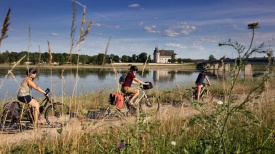
The Loire Valley is an ideal destination for cyclists who want to combine scenic routes, historic landmarks, and French gastronomy. Its beautiful cycling itineraries connect magnificent châteaux, charming villages, vineyards, and peaceful countryside. With generally moderate terrain, the region is particularly attractive for recreational cyclists looking to explore France at a relaxed pace.
Discover the Legendary Roads of the French Alps
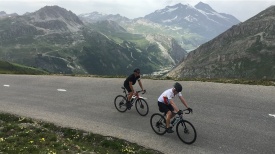
The French Alps offer a more challenging cycling experience, with spectacular mountain scenery and legendary climbs. The regions around Annecy, Sallanches, and Les Saisies provide access to rewarding mountain roads, traditional Alpine villages, and beautiful lakeside landscapes. Experienced cyclists can tackle demanding ascents, while other visitors can enjoy gentler rides through scenic valleys.
Challenge Yourself in the French Pyrenees
The Pyrenees are among the most iconic cycling destinations in Europe. Famous mountain passes such as the Col du Tourmalet attract cyclists eager to ride the same roads as Tour de France champions. Beyond the legendary climbs, the region offers magnificent valleys, authentic villages, and peaceful routes surrounded by extraordinary natural scenery.
Plan Your Cycling Adventure with Discover France
At Discover France, we believe that exploring France by bicycle is one of the best ways to experience its landscapes, culture, and traditions. Whether you dream of discovering the châteaux of the Loire Valley, riding through the spectacular French Alps, or conquering legendary Pyrenean climbs, France offers exceptional opportunities for cycling enthusiasts.
The Tour de France provides the inspiration, but you do not have to be a professional cyclist to enjoy these incredible destinations. A cycling vacation allows you to travel at your own pace, discover hidden gems, and create unforgettable memories along some of France’s most beautiful roads.
Tour de France 2027: An Unforgettable Cycling Adventure
The Tour de France 2027 Routes and Stages promise a remarkable journey through some of Europe’s most spectacular cycling destinations. From the historic Grand Départ in Edinburgh to the magnificent châteaux of the Loire Valley, the challenging climbs of the French Alps, the decisive mountain battles in the Pyrenees, and the grand finale in Paris, the 114th edition combines sporting excitement with extraordinary scenery.
With 21 stages, 71 kilometers of individual time trials, three summit finishes, and more than 53,000 meters of climbing, the Tour de France 2027 will test the endurance, versatility, and determination of the world’s best cyclists.
For cycling enthusiasts, the race is also an invitation to explore France beyond the competition. From peaceful countryside roads to legendary mountain passes, the destinations featured along the route offer endless opportunities for unforgettable cycling adventures.
Get inspired by the Tour de France 2027 and discover the beauty of France by bike with Discover France.




 Book Now
 5 Days / 4 Nights

 From 4 July to 8 July 2027
 From 3090€
 Book Now


 France Bike Tours
 Europe Bike Tours
 Europe Luxury Bike Tours
 Sunshine Bike Tours
 Epic Cycling