No tours available yet...
No tours available yet...
No tours available yet...



Adventure Vacations
for Couples

European Tours
for Seniors

European Tours
for Families

Group Tours to
Europe

Honeymoon
Europe Tour

Singles Tours
Europe
Alsace Wine Route
Bordeaux
Brittany
Burgundy
Canal du Midi
Champagne
Corsica
Dordogne
Loire Valley
French Riviera
Provence
Normandy
Paris
Pays Basque
Pyrenees
South France
France Castles
Massif Central
Northern France
Prehistoric Caves
WW2 Tours
Alps
Guadeloupe
Belgium
Portugal
Italy
Scotland
Tuscany
Holland
Ireland
Croatia
Switzerland
United Kingdom
Sardinia
Sicily
Puglia
Catalonia
Northern Spain
Atlantic Coast
Baltic States
Nordic States
France Bike Tours
Europe Bike Tours
Europe Luxury Bike Tours
Sunshine Bike Tours
Epic Cycling
Cycling Challenges
Italy
Spain
Holland
United Kingdom
Portugal
Ireland
Switzerland
Croatia
Provence
Loire Valley
Bordeaux
Brittany
Burgundy
Dordogne
Alsace
Massif Central
Italy
Spain
Portugal
Provence
Loire Valley
Bordeaux
Dordogne
Burgundy
Brittany
Alsace
Burgundy
Alsace
Bordeaux
Bordeaux
Burgundy
Alsace
Provence
Loire Valley
Languedoc
Portugal
Provence
Alsace
Dordogne
Loire Valley
Brittany
Burgundy
Normandy
Corsica
Provence
Normandy
Dordogne
Loire Valley
Burgundy
Alsace
Brittany
Corsica
Loire Valley
Provence
Bordeaux
Languedoc
Dordogne
Burgundy
Brittany
Guadeloupe
Loire Valley
Dordogne
Brittany
Provence
French Riviera
Spain
Normandy
Corsica
Atlantic Coast
Loire Valley
Dordogne
Brittany
Provence
French Riviera
Spain
Normandy
Corsica
Atlantic Coast
Provence
Loire Valley
Languedoc
Dordogne
Provence
Loire Valley
Languedoc
Dordogne
Guadeloupe is not a single island but an archipelago, and that variety is one of its greatest strengths for cyclists. Grande-Terre and Basse-Terre form the famous butterfly-shaped main island, while Marie-Galante, Les Saintes and La Désirade provide opportunities to experience quieter corners of the Caribbean. Each area has its own character, terrain and rhythm.
Cycling here requires a little more preparation than riding in many regions of mainland France. Tropical temperatures, strong sunshine, sudden rain showers and changing road conditions all influence the experience. Choose the right routes, however, and Guadeloupe becomes an exciting destination for cyclists who enjoy combining active travel with nature, culture and coastal scenery.
The best place to cycle in Guadeloupe depends largely on your fitness level and the landscapes you want to explore. Grande-Terre offers the most accessible terrain, especially around its coastal plains and agricultural areas. Basse-Terre is considerably more mountainous and is better suited to cyclists comfortable with climbing. Marie-Galante provides perhaps the most relaxed atmosphere, with quiet roads linking beaches, villages and sugarcane plantations.
Rather than thinking of Guadeloupe as one continuous cycling destination, it is useful to consider each island or region separately. Shorter rides can then be combined with swimming, hiking, local markets or visits to historic sites.
| Cycling Area | Landscape | Typical Terrain | Best For |
|---|---|---|---|
| Grande-Terre | Sugarcane fields, cliffs and beaches | Flat to rolling | Leisure rides and coastal cycling |
| Basse-Terre | Rainforest, mountains and waterfalls | Hilly to mountainous | Experienced and energetic cyclists |
| Marie-Galante | Rural countryside and coastline | Rolling | Quiet and scenic cycling |
| La Désirade | Dry coastal landscapes | Mostly gentle | Short exploratory rides |
| Les Saintes | Bays, hills and island villages | Short but steep in places | Compact island exploration |
Grande-Terre is one of the most approachable areas for cycling in Guadeloupe. Compared with neighboring Basse-Terre, its landscape is generally lower and more open. Roads cross extensive sugarcane fields, pass through small communities and eventually reach dramatic sections of Atlantic coastline.
The eastern and northern parts of Grande-Terre are particularly interesting for cyclists looking to experience a more rural side of the island. Instead of staying close to the busier tourist centers, riders can explore roads between fields, coastal viewpoints and traditional towns.
One of the pleasures of cycling across Grande-Terre is the constant contrast between agricultural landscapes and the ocean. A road may run between sugarcane plantations before suddenly opening onto a viewpoint over limestone cliffs or brilliant blue water. Tropical vegetation adds color throughout the journey, while roadside fruit stands and small local restaurants create natural places to stop.
The eastern tip of Grande-Terre is one of Guadeloupe’s most striking coastal areas. From Saint-François, cyclists can head toward Pointe des Châteaux, where the landscape becomes increasingly wild and exposed. The road passes beaches, dry tropical vegetation and open views toward the Atlantic.
Pointe des Châteaux itself is known for its rugged rock formations and panoramic views. The final approach feels far removed from the greener interior of Guadeloupe, showing just how varied the archipelago can be within relatively short distances.
Starting early is particularly worthwhile in this part of the island. The road can become hotter and busier as the day progresses, and there is limited shade on some exposed sections. An early ride also leaves plenty of time to enjoy Saint-François, its waterfront and nearby beaches later in the day.
Northern Grande-Terre feels more remote than the resort areas farther south. Cycling around Anse-Bertrand and toward the northern coast reveals a landscape of farmland, cliffs and small communities.
The famous cliffs at Pointe de la Grande Vigie provide one of the region’s most dramatic natural landmarks. The roads leading through northern Grande-Terre can include rolling sections, but the terrain remains more accessible than the long mountain climbs found on Basse-Terre.
This is a good area for cyclists who appreciate scenery rather than famous monuments. The appeal comes from the rhythm of the countryside, the ocean views and the feeling of traveling through a less developed part of the island.
Basse-Terre offers a very different experience. Dominated by mountains, dense rainforest and the La Soufrière volcano, this western half of Guadeloupe is greener, steeper and more demanding.
For experienced cyclists, however, it is arguably the most spectacular place to ride in the archipelago. Roads climb through lush vegetation, pass waterfalls and offer occasional views toward the Caribbean Sea. Elevation changes quickly, and tropical humidity can make climbs feel more difficult than their distance might suggest.
Cycling on Basse-Terre is therefore best approached with realistic daily distances. A relatively short route on a map may involve considerable climbing. The reward is access to some of Guadeloupe’s most impressive natural scenery.
One of the iconic roads across Basse-Terre is the Route de la Traversée. Crossing the mountainous interior, it passes through the lush environment of Guadeloupe National Park and provides an unforgettable introduction to the island’s tropical rainforest.
This is not simply a ride from one town to another. The forest itself is the attraction. Giant ferns, dense vegetation and misty mountain scenery create an atmosphere entirely different from the beaches and sugarcane fields associated with other parts of Guadeloupe.
Conditions can change quickly in the mountains. Rain is common, even when the coast is sunny, and wet roads require additional care on descents. Cyclists should carry sufficient water and be prepared for both intense heat and tropical showers during the same outing.
The western coastline of Basse-Terre offers another rewarding possibility. Towns and villages face the Caribbean Sea, with mountain slopes rising sharply behind them. Depending on the chosen section, cyclists encounter a mix of coastal roads, climbs and descents.
Areas around Deshaies are especially attractive. This corner of Guadeloupe combines tropical greenery with beautiful bays and a relaxed coastal atmosphere. Cycling here works well when rides are kept relatively short, allowing time to stop at beaches or enjoy a meal overlooking the water.
Farther south, the terrain becomes increasingly dramatic as the road approaches the volcanic landscapes around Basse-Terre. Riders should expect more elevation changes and allow extra time compared with a similarly sized route on Grande-Terre.
For travelers looking for peaceful cycling in Guadeloupe, Marie-Galante deserves special attention. Located southeast of the main islands, it has a slower pace and a strongly rural character. Sugarcane fields cover much of the landscape, traditional windmills remain visible in the countryside, and small roads connect villages with beaches and agricultural communities.
Marie-Galante is well suited to exploration by bike because distances are manageable and the roads generally feel quieter than those on the main island. The terrain is not completely flat, but the rolling hills are usually more approachable than Basse-Terre’s mountain roads.
A day on the bike can include stretches through sugarcane fields, views of the coast and stops in villages such as Grand-Bourg, Capesterre or Saint-Louis. It is an excellent destination for cyclists who prefer an unhurried journey where local atmosphere matters more than covering a large number of kilometers.
Cycling around Marie-Galante also offers an opportunity to better understand the agricultural heritage of Guadeloupe. Sugarcane has played an important role in the island’s history and remains central to its landscape today.
Traditional windmill remains and rum distilleries provide natural points of interest along a ride. Rather than treating cycling as a purely sporting activity, visitors can use the bike as a way to connect villages, heritage sites and coastal viewpoints.
Because of the island’s compact scale, a cycling stay can be designed around relatively short daily stages. This leaves time for swimming, exploring local markets and enjoying Creole food without feeling rushed.
La Désirade provides another change of atmosphere. Long and narrow, the island lies east of Grande-Terre and has a drier, more rugged character. Its main road follows much of the southern coast, creating opportunities for relatively straightforward cycling.
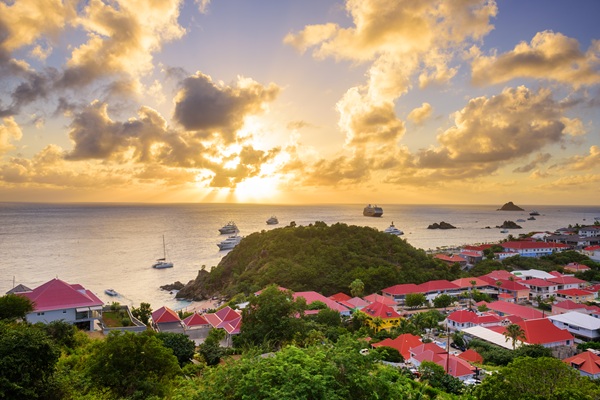
The distances involved are modest, making La Désirade suitable for a day of exploration rather than a long-distance cycling itinerary. Along the route, riders encounter small beaches, quiet settlements and views across strikingly clear Caribbean water.
The landscape here feels open and exposed, so protection from the sun is essential. Shade can be limited, and riding earlier in the day is generally more comfortable.
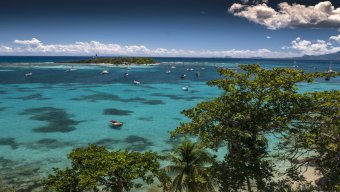
The small islands of Les Saintes are known for their picturesque bays, colorful houses and views across the surrounding Caribbean Sea. Terre-de-Haut is the most frequently visited island and can be explored over relatively short distances.
Do not confuse short mileage with effortless cycling, however. Several roads climb sharply away from the waterfront, and tropical heat can make even brief ascents challenging. The advantage is that viewpoints, beaches and villages are rarely far apart.
For cyclists, Les Saintes are best treated as a compact side trip rather than a destination for long daily stages. The bicycle provides an enjoyable way to move between different parts of the island while avoiding the need to rush from one attraction to another.
Guadeloupe has a tropical climate, so temperature and humidity are important considerations when planning a cycling trip. Conditions remain warm throughout the year, but rainfall and humidity vary by season and location.
The drier period is generally the most comfortable for active travel, particularly for cyclists planning longer rides. Basse-Terre receives considerably more rainfall than Grande-Terre because of its mountainous terrain and rainforest climate.
Whatever the season, starting early is one of the simplest ways to make cycling more enjoyable. Morning temperatures are generally more comfortable, traffic may be lighter, and cyclists can finish longer rides before the strongest heat of the afternoon.
| Conditions | What Cyclists Should Expect | Useful Approach |
|---|---|---|
| Strong sunshine | High UV exposure, especially on open coastal roads | Ride early and use effective sun protection |
| Tropical heat | Greater hydration needs | Carry more water than on a similar ride in mainland France |
| Mountain rain | Sudden showers on Basse-Terre | Bring a lightweight rain layer and descend carefully |
| Trade winds | Headwinds on exposed coastal sections | Allow extra time for seaside routes |
Cycling infrastructure in Guadeloupe is not comparable to regions of France with extensive networks of separated cycle paths. Cyclists frequently share roads with cars, so route choice plays an important role in the quality of the experience.
Smaller roads through agricultural areas and villages are often more enjoyable than major traffic corridors. On the main islands, planning a route that avoids the busiest roads whenever possible can transform the experience.
Road surfaces can also vary. Potholes, drainage channels and debris after heavy rain require attention, particularly when descending. In rural areas, vegetation may reduce visibility around bends, so riding conservatively is advisable.
Hydration is another major consideration. Tropical conditions increase fluid requirements significantly, and water should be carried even on relatively short rides. Snacks are useful on longer routes, although small shops and local food stops can often be found in towns and villages.
One of the best ways to enjoy cycling in Guadeloupe is not to treat every day as a long-distance ride. The islands lend themselves to a combination of cycling and other outdoor activities.
A morning ride on Grande-Terre can be followed by an afternoon at the beach. A challenging route on Basse-Terre can be combined with a walk to a waterfall or a visit to a botanical garden. On Marie-Galante, cycling fits naturally with stops at heritage sites, local producers and quiet beaches.
This approach also makes it easier to adapt to the tropical climate. Rather than chasing mileage, cyclists can focus on discovering a particular landscape or community each day.
For travelers accustomed to cycling through Provence, Burgundy, the Loire Valley or Bordeaux, Guadeloupe can feel like another world. Yet it remains a fascinating part of France to discover by bike. French and Creole influences meet here against a backdrop of rainforest-covered mountains, sugarcane fields and Caribbean beaches.
The diversity is remarkable. One ride can follow quiet roads through Grande-Terre’s agricultural landscapes, while another tackles the humid climbs of Basse-Terre. A few days later, cyclists can explore the slower roads of Marie-Galante or enjoy a short island ride overlooking the turquoise waters of Les Saintes.
Guadeloupe is best suited to travelers who are comfortable with a little spontaneity. Routes are not always as predictable as the carefully developed cycling corridors found elsewhere in France, and tropical conditions add another dimension to the journey. In return, cyclists experience landscapes, sounds and flavors that are impossible to confuse with any other French destination.
When deciding where to go cycling in Guadeloupe, consider creating an itinerary that reveals several different sides of the archipelago. Choose Grande-Terre for accessible roads through sugarcane country and striking Atlantic scenery. Head to Basse-Terre for rainforest landscapes, mountain climbs and a more physically demanding adventure. Spend time on Marie-Galante if peaceful rural roads and a slower island rhythm are your priorities.
Smaller islands such as La Désirade and Les Saintes can then add shorter rides to the journey, combining cycling with beaches, villages and panoramic coastal views.
Above all, Guadeloupe rewards cyclists who give themselves time. Distances do not need to be enormous to create memorable days on the bike. Stop for tropical fruit, watch fishermen returning to a village, take in the view from a coastal road or cool off in the Caribbean after a morning ride. This combination of cycling, nature and island culture makes Guadeloupe one of the most distinctive destinations for travelers looking to discover another side of France on two wheels.











 France Bike Tours
 Europe Bike Tours
 Europe Luxury Bike Tours
 Sunshine Tours
 Epic Cycling




 7 Days / 6 Nights
 Guadeloupe
 Best period from November to March
 From 1577€